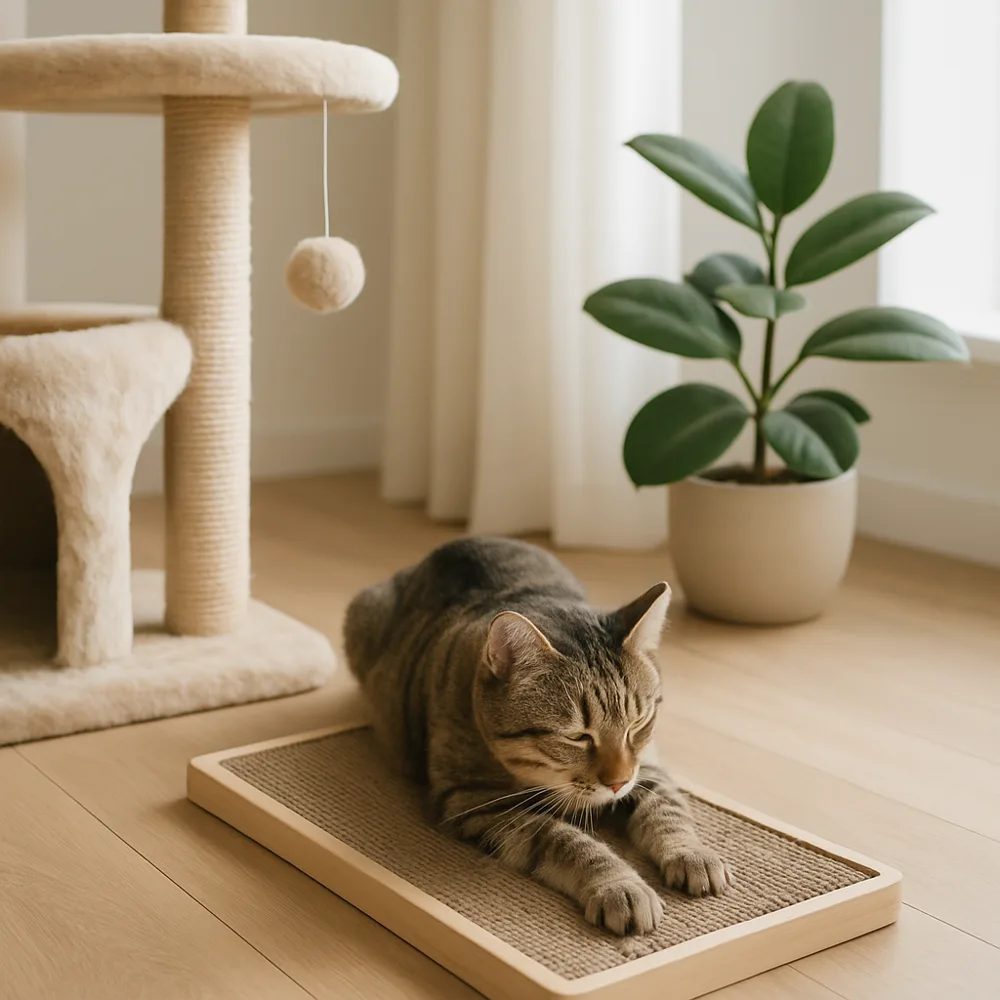
Cat trees can add vertical space to play, but a cat should be able to climb and land without obstacles. Keep the area around the base clear of hard objects, dangling cords, and items that could fall. Check the tree’s stability before energetic play and follow any guidance about anchoring. Give your cat a route down as well as a route up, especially if they are young, older, or uncertain.
Use wand toys in ways that encourage controlled movement. Let the toy travel across a platform or down toward a lower level, rather than repeatedly tempting a cat to leap from an unsafe height. Allow pauses and let the cat catch the toy occasionally. Avoid leaving string or wand toys unattended, since a cat could chew or become tangled in them. Store them safely after play.
Watch your cat’s body language during activity. A cat who pauses, crouches tensely, or tries to leave may need a break. End a session calmly and offer fresh water and a quiet resting place. Inspect platforms and posts after rough play for loose parts or frayed material. Regular maintenance and thoughtful play make the tree a useful enrichment space without turning every climbing session into a high-speed chase.