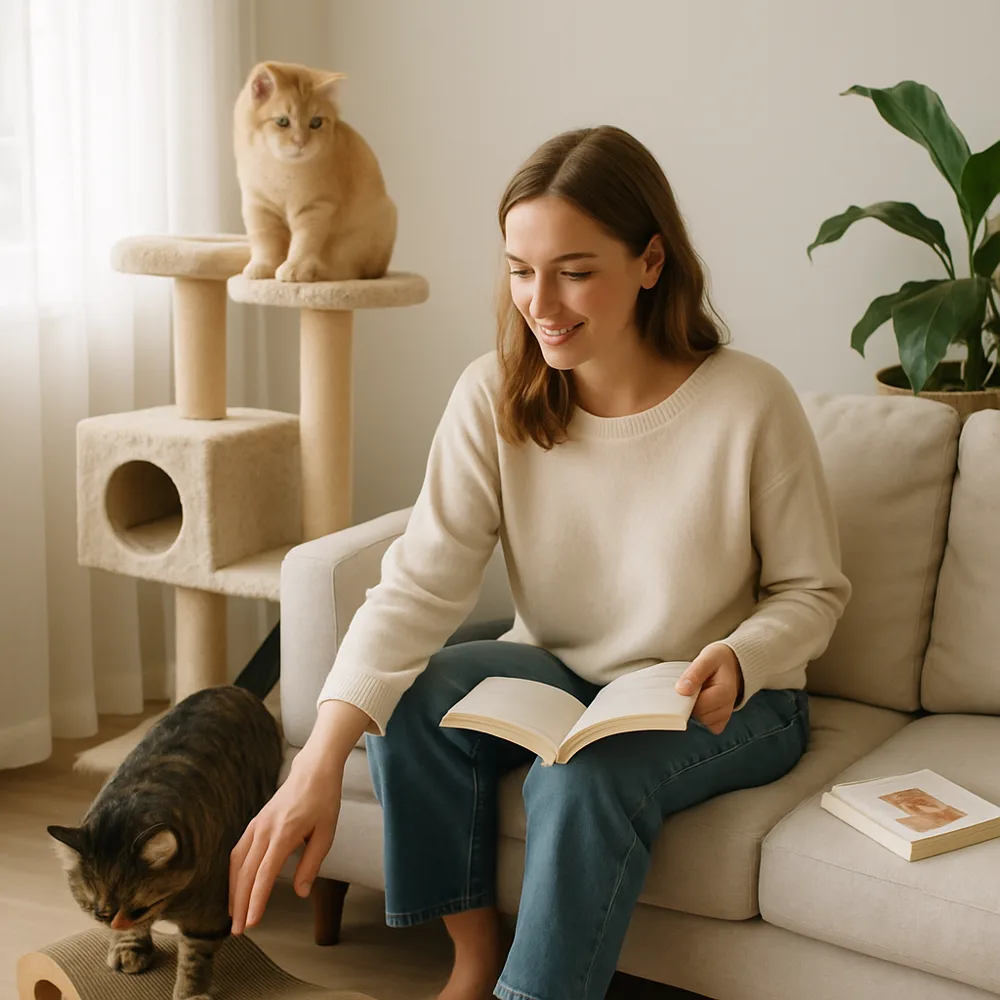
Cats scratch for several reasons: to maintain their claws, stretch, leave scent marks, and express excitement. The surface they choose is personal. Some cats enjoy the rough, firm feel of sisal, while others prefer carpet, cardboard, or a softer woven texture. Notice what your cat already scratches and whether they favor a vertical surface, a flat one, or both.
Material is only part of the decision. A vertical post needs enough height for a full stretch and a stable base that will not slide or tip. Horizontal scratchers should be broad enough for your cat to brace their paws and pull comfortably. The best surface is one your cat can use with their natural posture. If you are unsure, offer more than one texture and observe which receives regular attention.
Keep the scratcher in a useful location. Cats often scratch after waking, during play, or near routes they travel, so place a suitable option near a favored resting area or the spot where unwanted scratching occurs. Replace worn cardboard or repair loose material before it becomes frustrating. Avoid assuming a cat is being difficult if they ignore one surface; changing the angle, stability, texture, or placement may make the scratcher more appealing.