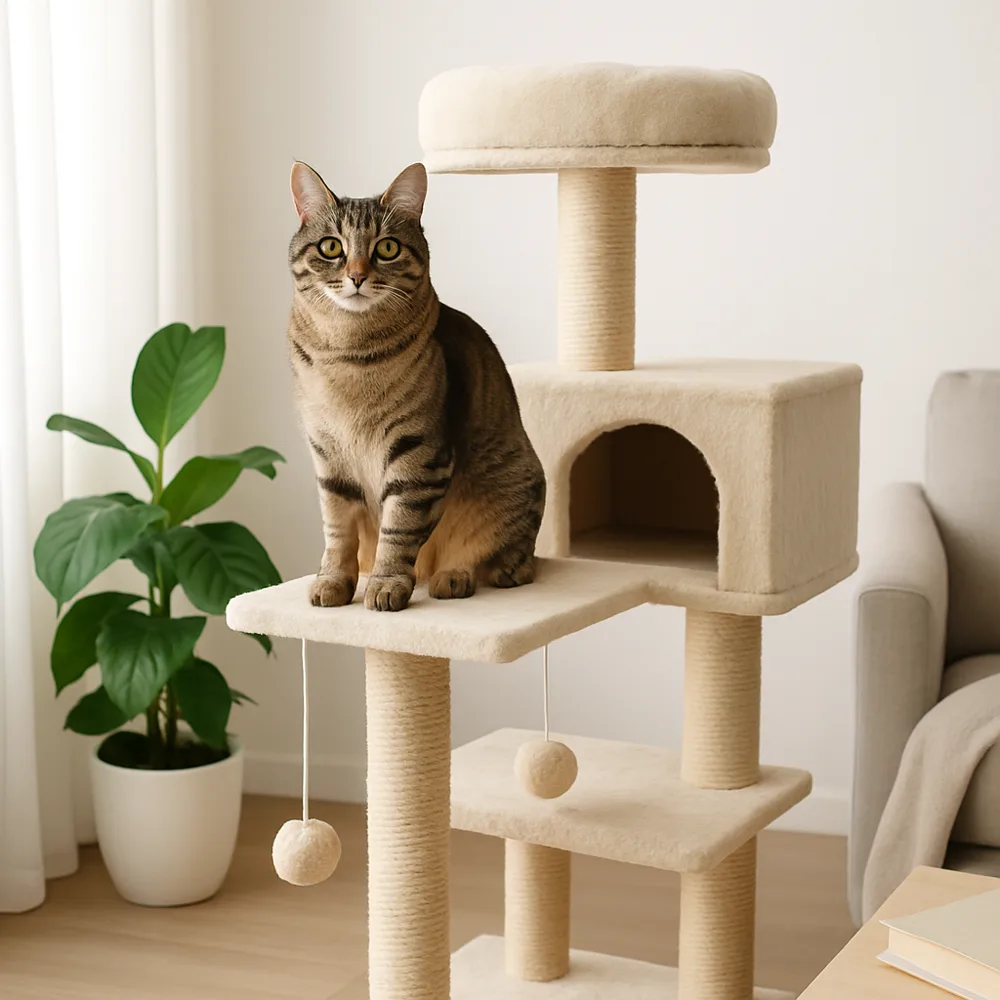
Scratching is normal cat behavior, not a deliberate attempt to upset a person. It helps cats stretch, maintain their claws, leave visual and scent marks, and release energy. Furniture may be attractive because it is sturdy, has a satisfying texture, or sits in a socially important spot. Noticing the chosen surface and location helps you select a more suitable alternative.
Place a stable scratcher close to the furniture your cat targets. Match its orientation and texture as closely as practical: a cat reaching up on a sofa arm may prefer a tall post, while a cat scratching a rug may like a horizontal pad. Offer a choice of surfaces if you are uncertain. Reward interest in the scratcher, and make the furniture less appealing temporarily with a safe protective cover.
Avoid yelling, spraying, or physically moving your cat’s paws. These responses can cause stress without teaching where scratching is welcome. Keep claws maintained through appropriate routine care, and ask a veterinarian or qualified groomer for guidance if trimming feels difficult. With a well-placed alternative, consistent encouragement, and protection for favored furniture, many households can redirect scratching while still allowing this important behavior.