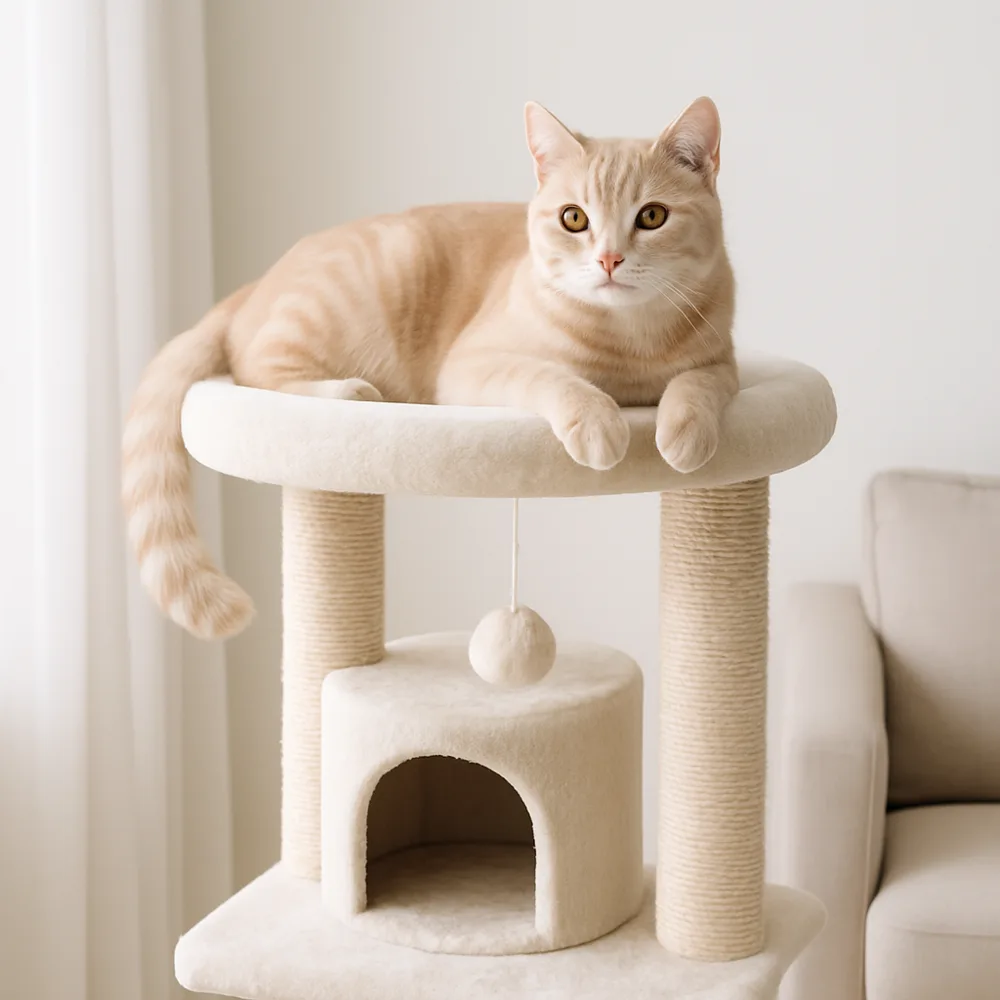
A compact home can still offer a cat useful climbing and resting options. Start by measuring the floor area and available ceiling height, then consider a narrow but stable design or a low, wide unit that doubles as a resting spot. Avoid choosing a tall tree solely because it takes up little floor space; a narrow footprint needs especially dependable construction and may require secure anchoring.
Look for features that serve more than one purpose, such as a scratch post beside a platform or a perch that fits a favored window. Keep the tree clear of doors, heating equipment, and narrow routes people use often. Make sure your cat can climb down without jumping onto a fragile surface. If the room cannot accommodate a large structure, several smaller scratchers and resting spots can still provide variety.
Think about the whole environment rather than the tree alone. Leave clear access to litter, food, and water, and provide a place to hide or rest at floor level. A small, well-placed setup is more useful than an oversized tower that makes the room difficult to navigate. Observe how your cat moves through the space and make adjustments if the tree creates congestion or is rarely used.